Take four numbers: front opening width, front opening height, depth at the shallowest point, and rear width. An insert fits when its body dimensions are smaller than the opening and depth, and its trim surround is larger than the opening so it covers the gap.
The four measurements
- Front opening width: inside edge to inside edge of the firebox opening, at the narrowest point.
- Front opening height: hearth floor to the underside of the lintel or top of the opening.
- Depth: front of the opening to the back wall, at the shallowest point (fireboxes often taper).
- Rear width: across the back wall, because many fireboxes narrow toward the back.
Write each number down in inches and measure twice. Listings for electric inserts give the body (firebox) dimensions and the overall trim or surround dimensions separately; you compare the body against your opening and depth, and the trim against the face of the fireplace.
Reading an insert listing
| Your measurement | Insert figure to compare | Rule |
|---|---|---|
| Front opening width | Body width | Body narrower than the opening |
| Front opening height | Body height | Body shorter than the opening |
| Depth | Body depth | Body shallower than the firebox |
| Rear width | Body rear width (if stated) | Body fits the tapered back |
| Face of the fireplace | Trim surround width and height | Trim larger than the opening, so it covers the gap |
Electric inserts are usually named by their nominal width (23, 26, 30 inches and so on). The nominal size is a guide; the body and trim figures in the listing are what decide fit.
Power and the cord
Most electric inserts plug into a standard 120-volt outlet and draw up to 12.5 amps on a 1,500-watt heat setting. Plan where the cord will run: some owners route it out of the side of the firebox to a nearby outlet; others have an electrician add an outlet inside the firebox or behind the surround. Follow the manual on cords; extension cords and power strips are generally ruled out.
The chimney and damper
An electric insert doesn't use the chimney, but an open flue will still pull warm room air up and out. Close the damper if it works; if it doesn't, a chimney balloon or a damper repair stops the draught. If the fireplace will never burn wood again, a chimney cap keeps rain and animals out of the unused flue.
Inserts in our catalog
Electric fireplace inserts we list, highest heater wattage first: EFIRETRIC EF447 23-Inch Electric Fireplace Insert, Legend Flame EF264A 35-Inch Electric Fireplace Insert, LifePlus FP201R Electric Fireplace Insert and ORALNER HR-11287 30-Inch Electric Fireplace Insert. Each product page shows the dimensions and trim size the maker states, the heater wattage and the flame settings.
If your firebox is very deep or very wide, a log-set style electric insert (a grate of glowing logs that sits in the opening) can fill it better than a box insert; those are listed in the same hub.
Heaters in this guide
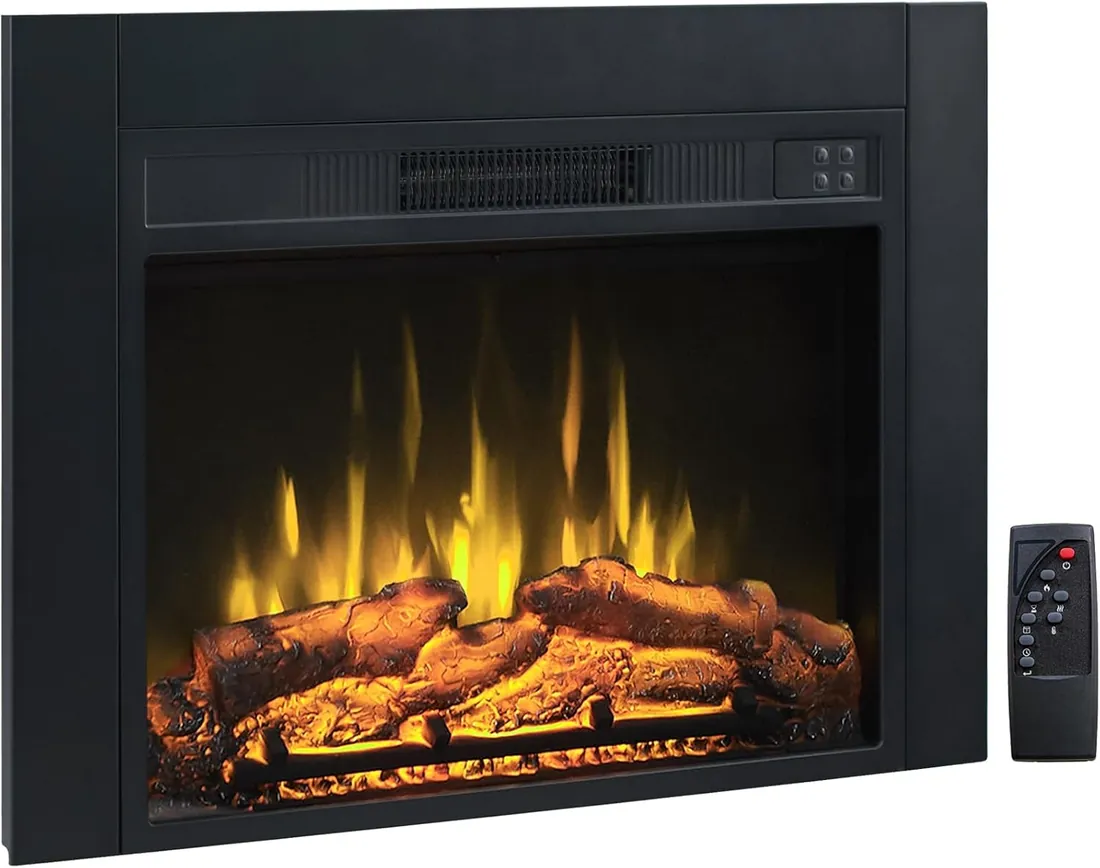
EFIRETRIC EF447 23-Inch Electric Fireplace Insert
23 in · 1,500 W
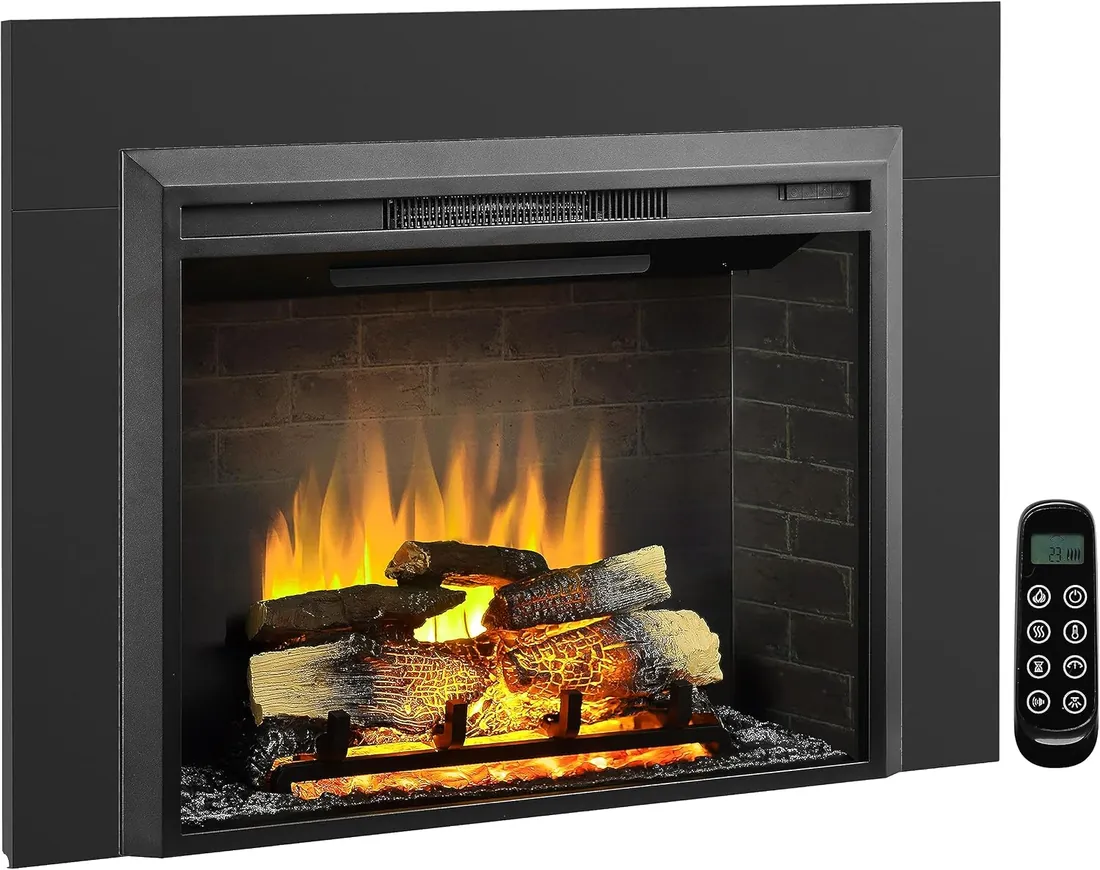
Legend Flame EF264A 35-Inch Electric Fireplace Insert
35 in · 1,500 W
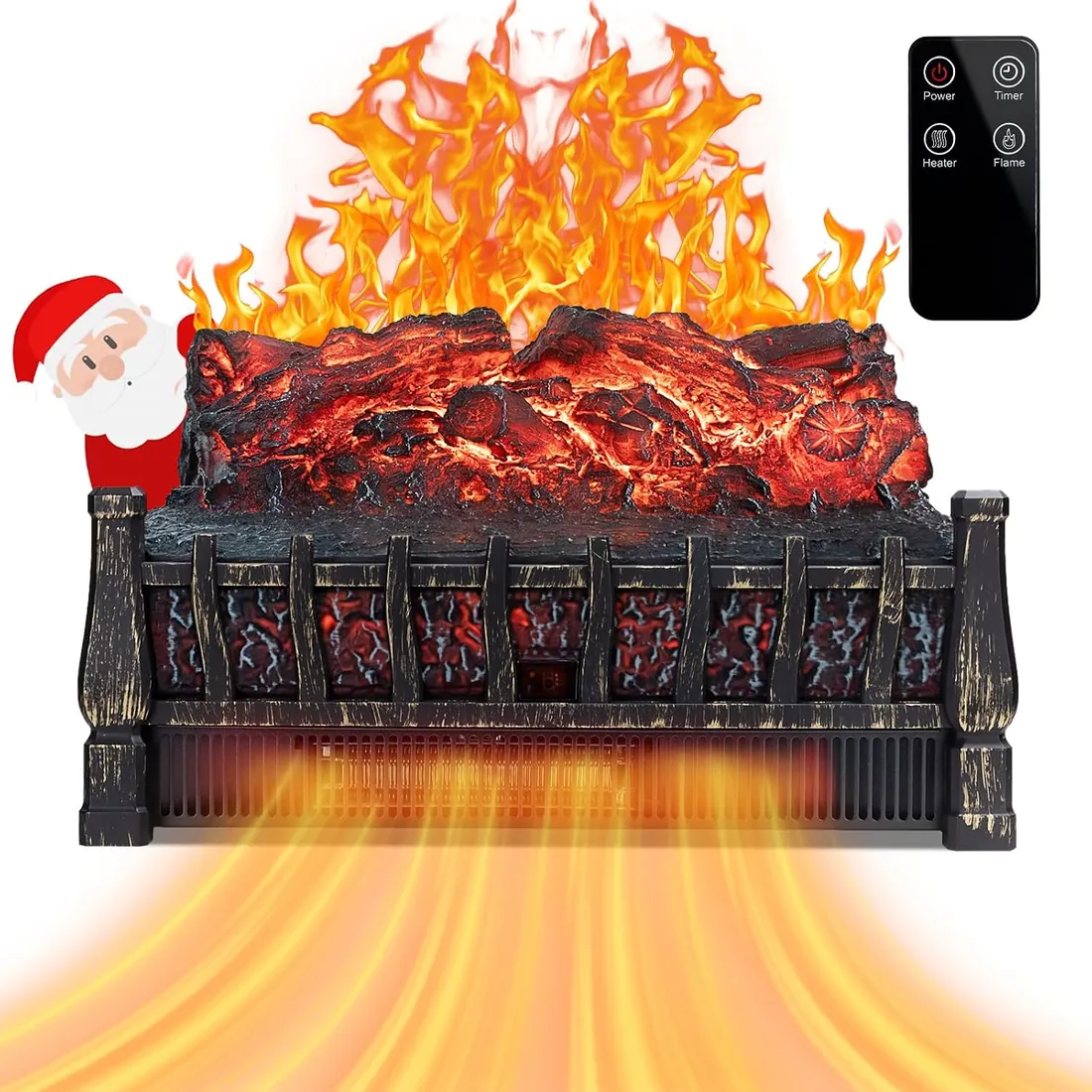
LifePlus FP201R Electric Fireplace Insert
1,500 W
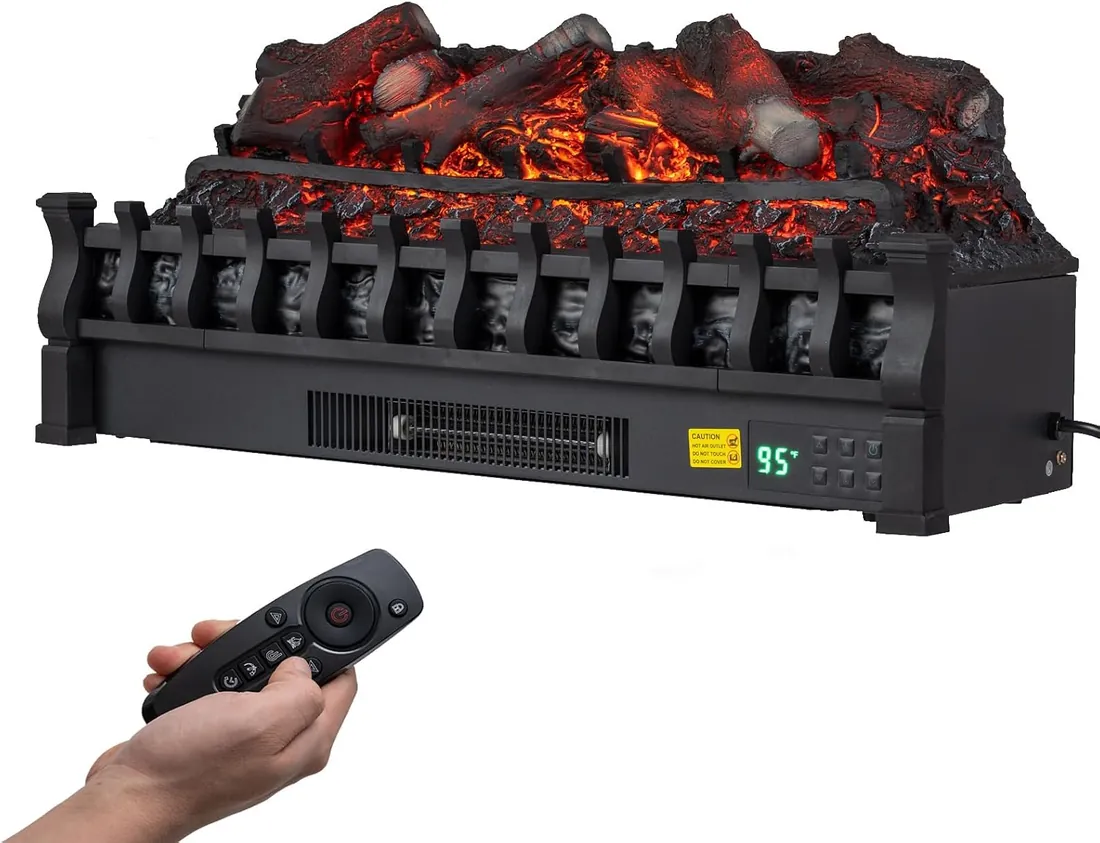
ORALNER HR-11287 30-Inch Electric Fireplace Insert
30 in · 1,500 W