A standard pellet stove needs electricity: without it the auger can't feed pellets and the combustion fan can't move air, so the fire goes out. A battery backup or generator keeps it running, and a few gravity-fed models are designed to burn without power; check the listing's own statement before relying on any of them.
Why a pellet stove needs power
A pellet stove is closer to a small furnace than to a wood stove. An electric auger turns a screw that moves pellets from the hopper to the burn pot at the rate the controls set; a combustion fan draws air through the fire and pushes exhaust out of the vent; a room fan blows heat off the heat exchanger; and an igniter lights the pellets at start-up. Take away the power and every one of those stops.
That is also why most pellet stoves list a voltage and a standard plug in their specifications, and why their manuals describe what happens in an outage. Read that section before you buy if outages are common where you live.
What happens when the power fails
When power drops mid-burn, the fire stops being fed and starved of forced air. Exhaust can no longer be pushed out by the fan, so smoke can drift back into the room through gaps until the remaining pellets burn out. Many stoves are designed to manage this, and the manual explains the maker's procedure; follow it rather than opening the door to fiddle with the fire.
Battery backups and generators
Some pellet stoves accept a battery backup unit sold for that purpose: an inverter and battery that take over when the grid fails, long enough to finish the burn safely or keep heating for some hours depending on the battery. Others are run from a generator through a transfer switch or inlet installed by an electrician. Whatever you use, the stove manual sets what is allowed, and a generator always runs outside, at least 20 feet from the house with its exhaust pointed away, per CPSC.
Pellet stoves that mention battery operation in our catalog: few listings in our catalog state a battery option, so check with the maker before you count on one.
Gravity-fed and non-electric designs
A small group of pellet stoves feed pellets by gravity from a tall hopper and draft the fire naturally, so they can burn without electricity. They trade away thermostat control and some convenience for outage independence. Gravity-fed models in our catalog: none currently pass our listing checks.
Hopper size and burn time
In normal use the hopper decides how often you refill. Makers state hopper capacity in pounds and often a burn time at the lowest setting; both depend on the setting you choose and the pellets you burn. The largest hoppers in our catalog: Ashley Hearth AP5622-W 3,000 Sq Ft Pellet Stove (170 lb), US Stove US5522-W 3,000 Sq Ft Pellet Stove (170 lb), Vogelzang US2500E-BL 3,000 Sq Ft Pellet Stove (170 lb).
| Option | Heat during an outage | What it needs |
|---|---|---|
| Standard pellet stove | Stops | Household power |
| Pellet stove with battery backup | Runs for a time set by the battery | A backup the maker allows |
| Pellet stove on a generator | Runs | Generator outdoors, an electrician-installed connection |
| Gravity-fed pellet stove | Runs, without thermostat control | No power; a tall hopper kept filled |
| Wood stove | Runs (any blower stops) | Dry cordwood |
If outages decide it
- Frequent long outages and no generator: a wood stove or a gravity-fed pellet design.
- Occasional short outages: a pellet stove with a battery backup the maker allows.
- Whole-house generator already installed: any pellet stove, wired to the manual's requirements.
Heaters in this guide
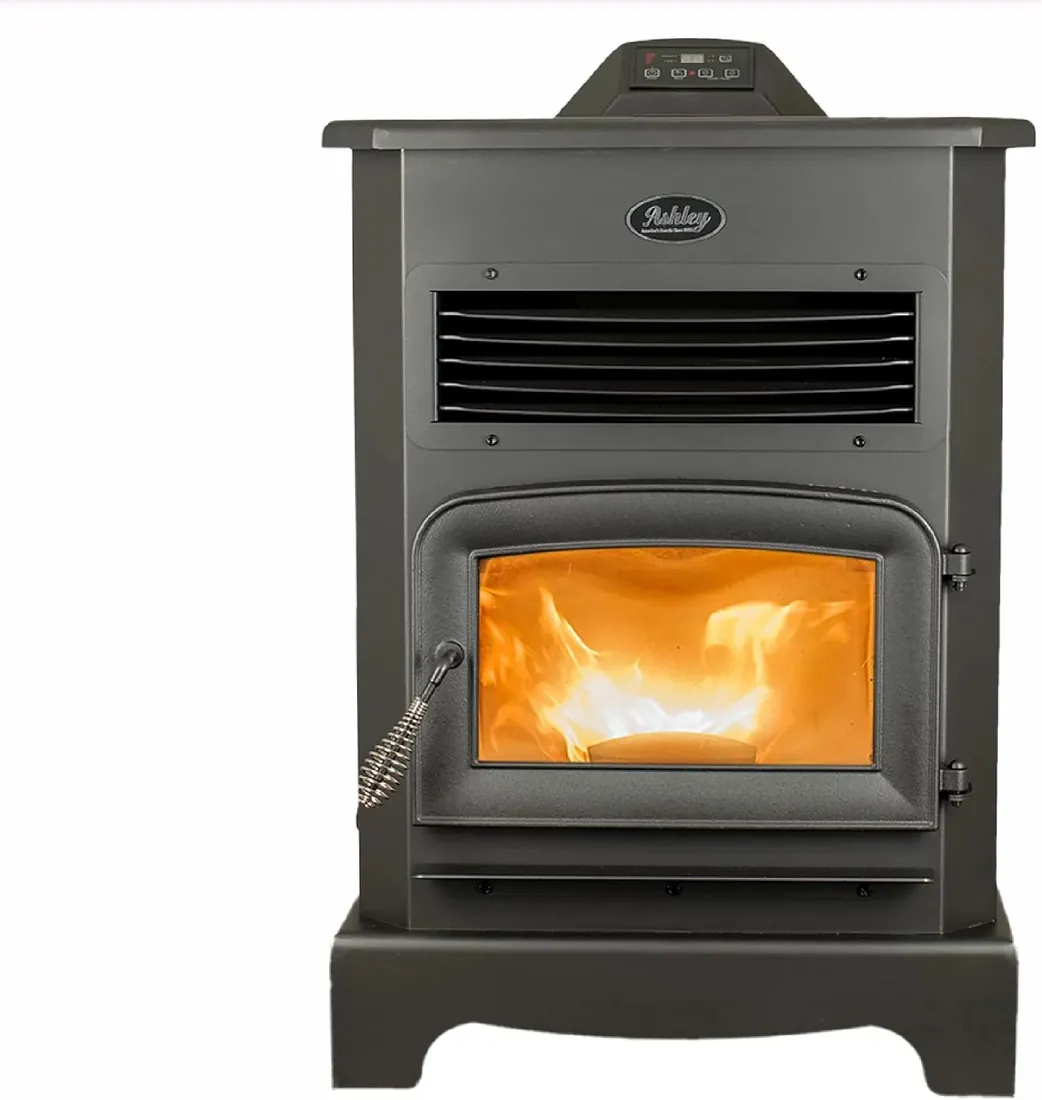
Ashley Hearth AP5622-W 3,000 Sq Ft Pellet Stove
3,000 sq ft · 33,000 BTU/h · 170 lb
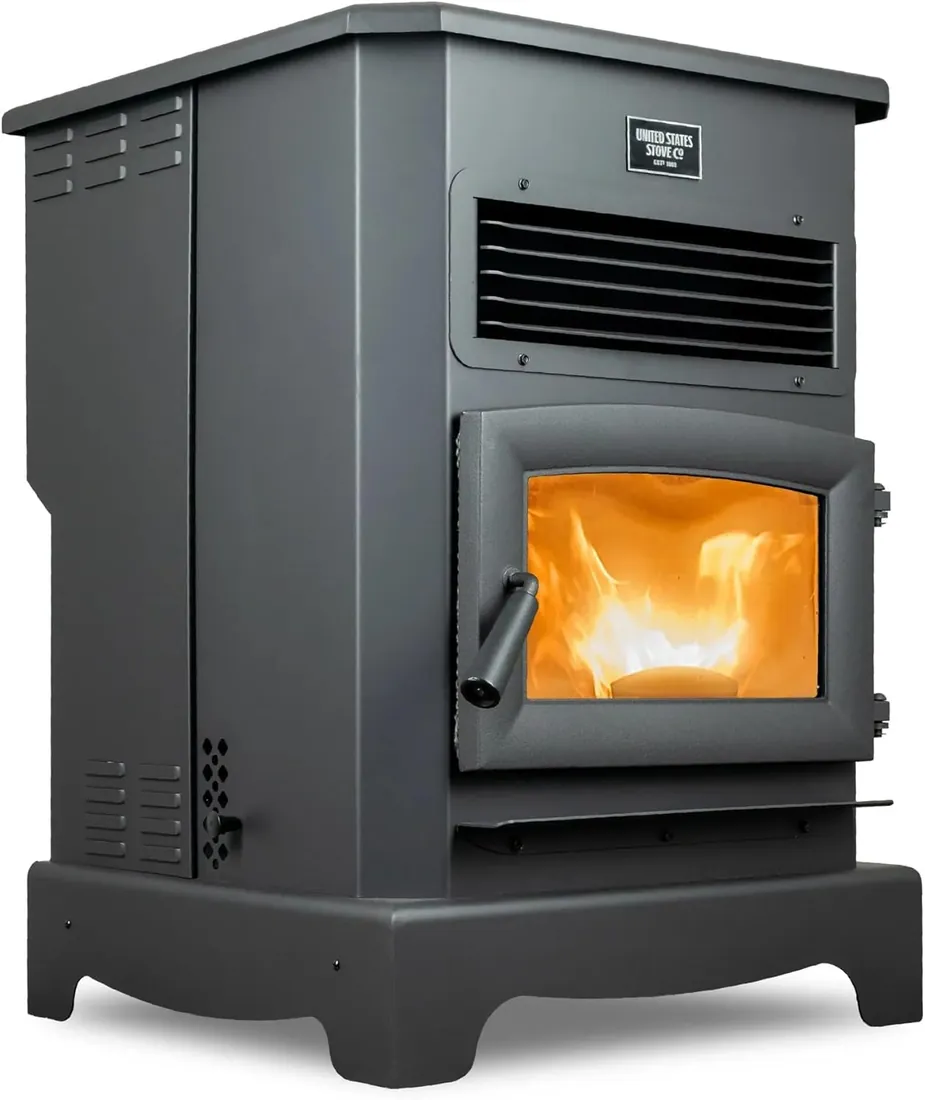
US Stove US5522-W 3,000 Sq Ft Pellet Stove
3,000 sq ft · 33,000 BTU/h · 170 lb
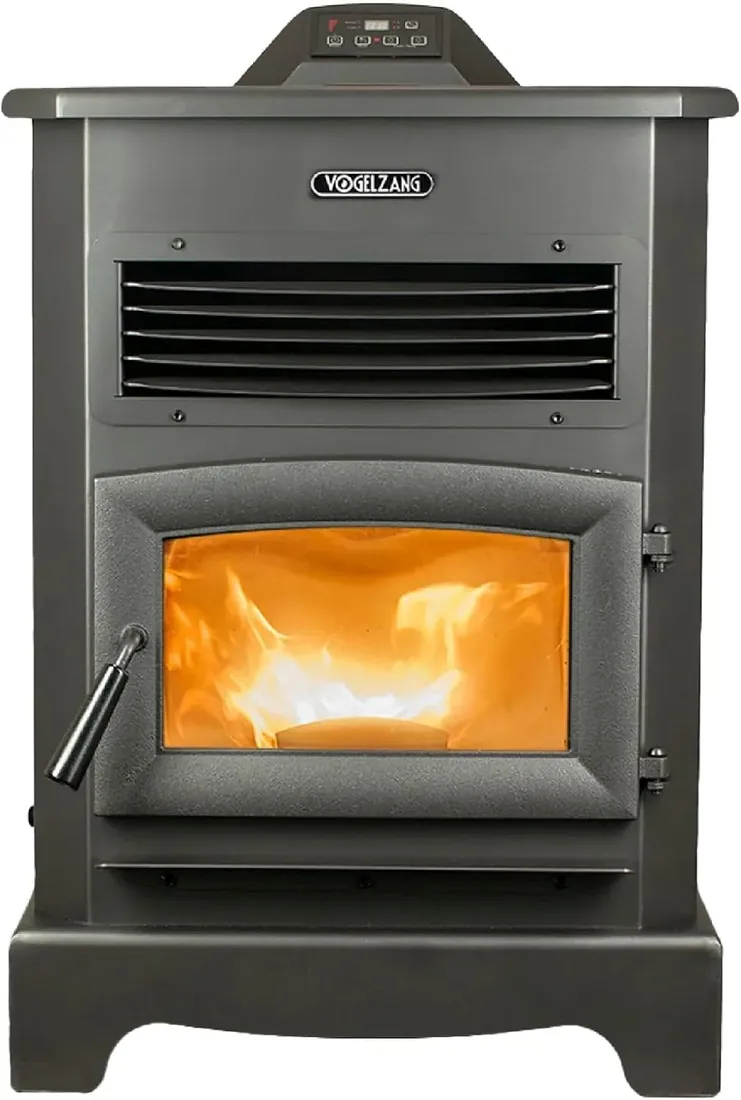
Vogelzang US2500E-BL 3,000 Sq Ft Pellet Stove
3,000 sq ft · 170 lb