Pick the smallest stove whose maker-stated heating area covers the open space it will sit in. A stove that is too big for its room gets run low and slow, which is when it smokes and builds creosote.
Why the house total is the wrong number
A wood stove heats by radiation and by warm air moving out of the room it sits in. Heat reaches the rooms that connect to that space through wide openings; it reaches a closed bedroom at the far end of a hallway poorly or not at all. That is why EPA's buying advice sorts stoves by the job, not by the house: small stoves suit a family room or a seasonal cottage, medium stoves suit small houses and medium-sized energy-efficient houses, and large stoves are for heating a large open area.
So the number to measure first is the open area around the hearth: the room the stove stands in plus any space that opens directly onto it through a wide doorway or an open stair. Measure length times width for each, add them, and write the total down. That figure, not the listing total of your house, is what you compare with the makers' heating areas.
EPA adds a point that matters for older houses: in a larger home with an older central furnace, a small stove used for zone heating a family or living room can cut fuel use while the furnace carries the rest of the house. Plenty of buyers who think they need a large stove are really zone heating.
How makers rate heating area
Every stove listing in our catalog states a heating area in square feet, and many also state a heat output in BTU per hour. Neither figure is measured under one shared test condition. Makers state the area they believe the stove can heat in an open, reasonably insulated home, with dry wood, in a typical climate. Two stoves that each claim 2,000 square feet can perform differently in the same house.
Read the claim as a ceiling, not a target. If the open space you measured is 900 square feet, a stove rated up to 1,200 square feet leaves margin for a cold snap and a draughty wall; a stove rated up to 2,500 square feet will spend most of the season choked down.
| Stove | Heats up to (maker) | Output (maker) |
|---|---|---|
| Real Flame RMQ6XTRX1574 350 Sq Ft Small Wood Stove | 350 sq ft | Not stated |
| Comfort Glow CGWS750 Small Wood Stove | 750 sq ft | Not stated |
| Pleasant Hearth HWS-1200-B 1,800 Sq Ft Wood Stove | 1,800 sq ft | 74,000 BTU/h |
| Ashley Hearth AW1120E-P 1,200 Sq Ft Wood Stove | 1,200 sq ft | 68,000 BTU/h |
| Ashley Hearth AW3200-P Wood Stove | 3,200 sq ft | 152,000 BTU/h |
| Ashley Hearth AW2520E-P 2,500 Sq Ft Wood Stove | 2,500 sq ft | 112,800 BTU/h |
Why oversizing causes trouble
An oversized stove makes the room too hot at a normal burn, so owners close the air control to slow it down. A starved fire smoulders. EPA's burning advice is blunt: build hot fires, because for most appliances a smouldering fire is not safe or efficient. Smouldering is what blackens the glass, sends smoke out of the chimney and condenses creosote on the flue walls.
Undersizing has the opposite cost: a stove run flat out every evening to keep up wears faster and burns through wood. The middle of a stove's range is where it burns cleanest, so the goal is a stove that meets your coldest-week need without running at its limit, and meets a mild evening without being starved.
A worked example
Say the stove will stand in a 16 by 22 foot living room (352 square feet) that opens through a wide arch onto a 14 by 18 foot kitchen and dining area (252 square feet). The bedrooms are off a hallway with doors. The open area is 604 square feet. A stove rated up to 1,000 to 1,200 square feet covers that space with margin. A stove rated for 2,000 square feet would heat those two rooms fast and then sit at its lowest setting.
If the same living room were open-plan with the stairwell and a loft, the measured space might reach 1,100 or 1,200 square feet, and a medium stove becomes the right size. Our stove size calculator does this arithmetic and lists only stoves whose maker-stated area covers the space you enter.
Inserts, chimneys and the firebox
A wood insert slides into an existing masonry fireplace and is sized the same way, but the opening adds limits: the insert's body has to fit the firebox width, height and depth, and the chimney needs a liner sized to the insert's flue collar. The heating-area claim of an insert assumes it is installed to the manual, with the liner the manual calls for.
Whatever the stove, the maker's installation manual sets the clearances to walls and furniture, the floor protection and the chimney height. Those requirements decide whether a given stove can go where you want it at all, so read them before you fall for a model.
What else to check before you order
- The heating area and output the maker states, read as a ceiling.
- The longest log the firebox takes, so it matches how you cut or buy wood.
- The flue collar size and whether your chimney or the pipe you plan matches it.
- Clearances to combustibles and the floor protection the manual calls for.
- Whether the model carries EPA certification under the 2020 standard (it is printed on the label at the back of the stove).
Heaters in this guide
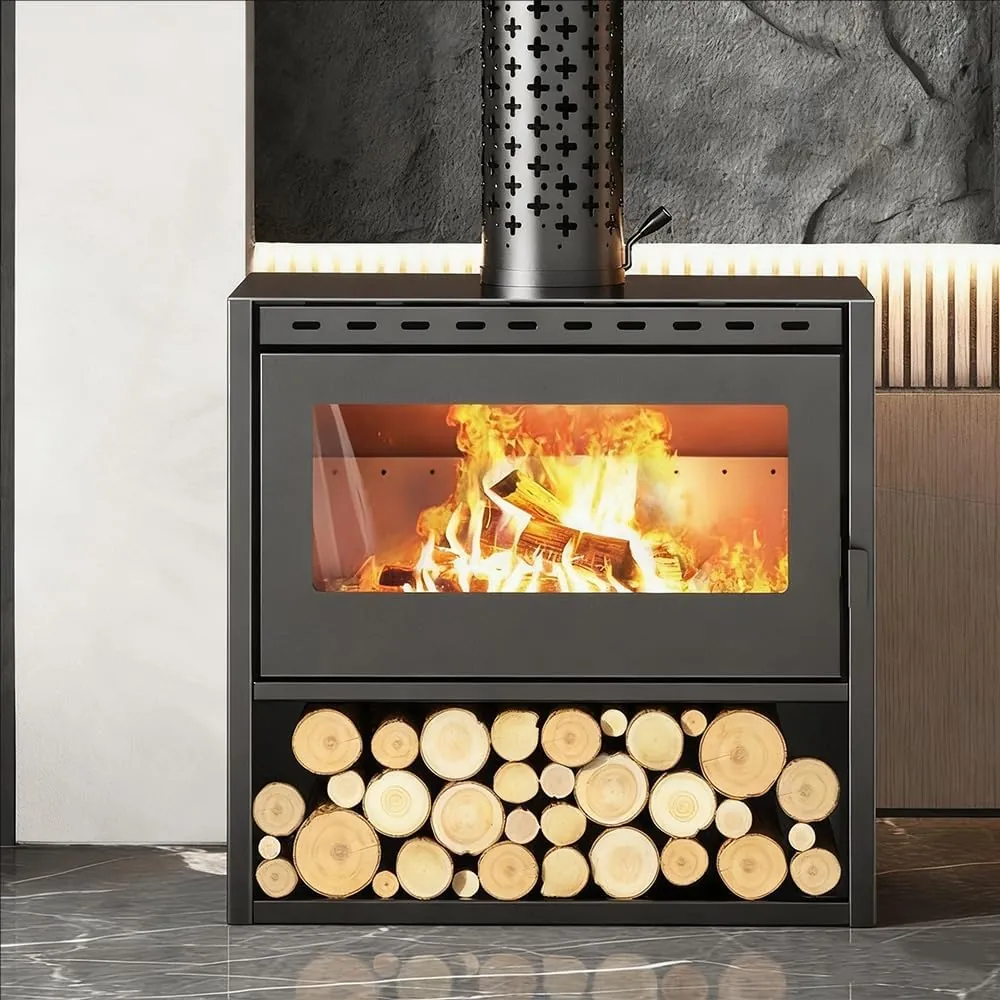
Real Flame RMQ6XTRX1574 350 Sq Ft Small Wood Stove
350 sq ft
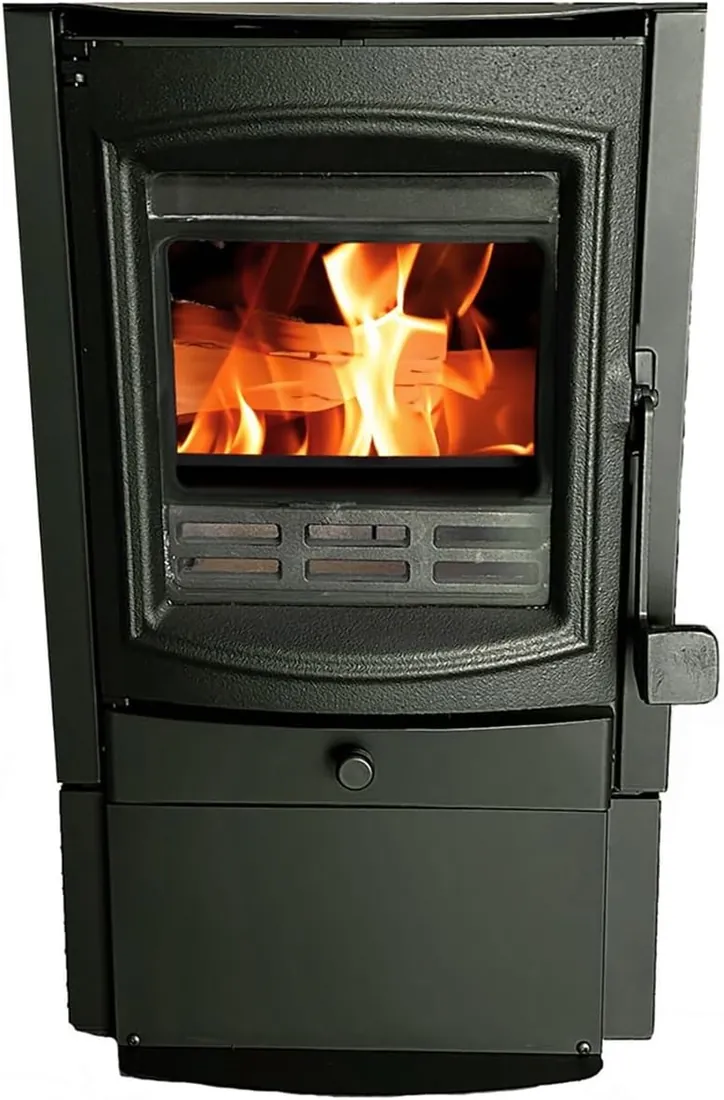
Comfort Glow CGWS750 Small Wood Stove
750 sq ft
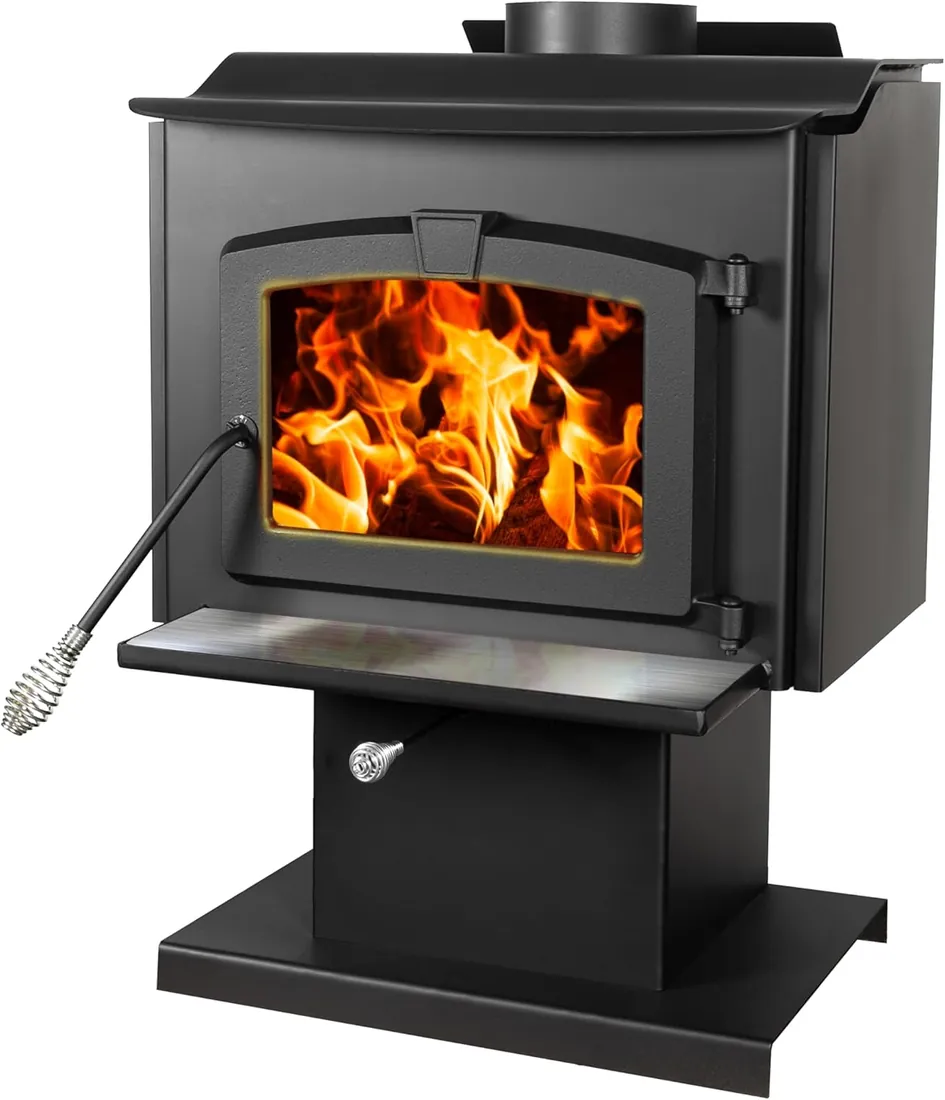
Pleasant Hearth HWS-1200-B 1,800 Sq Ft Wood Stove
1,800 sq ft · 74,000 BTU/h
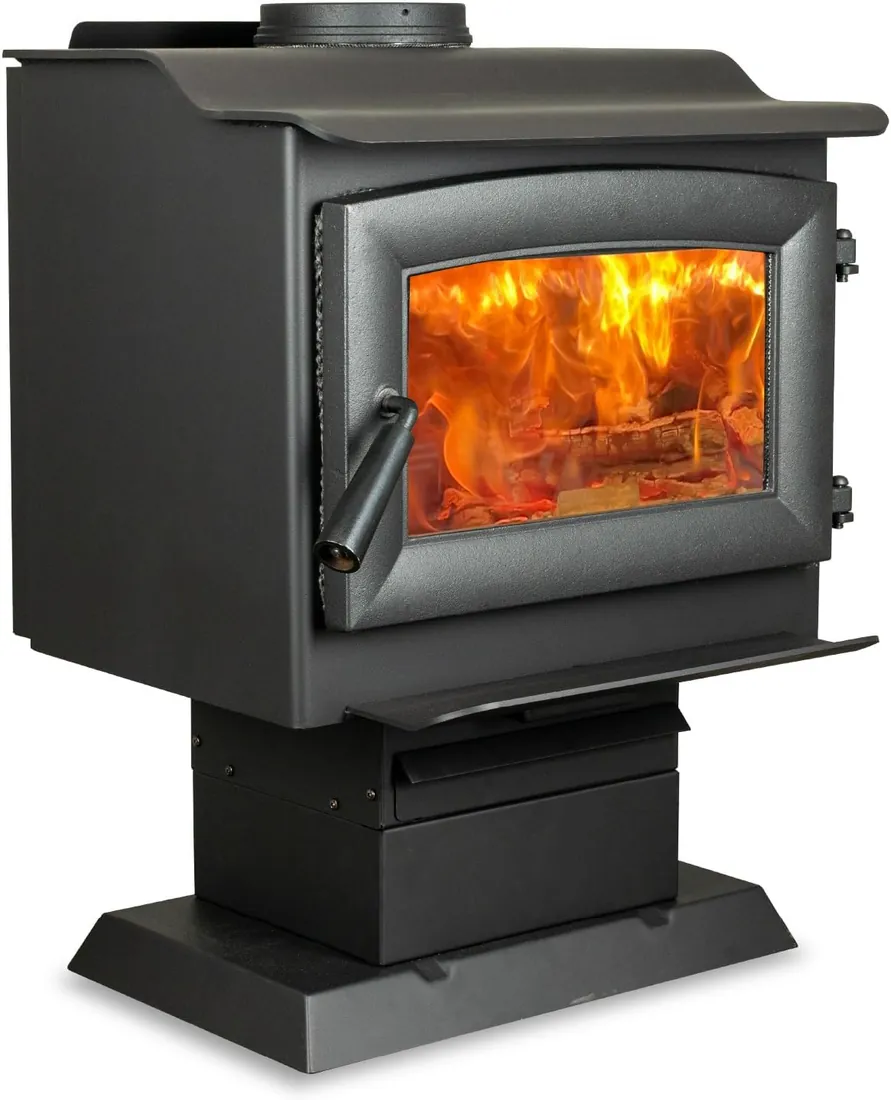
Ashley Hearth AW1120E-P 1,200 Sq Ft Wood Stove
1,200 sq ft · 68,000 BTU/h
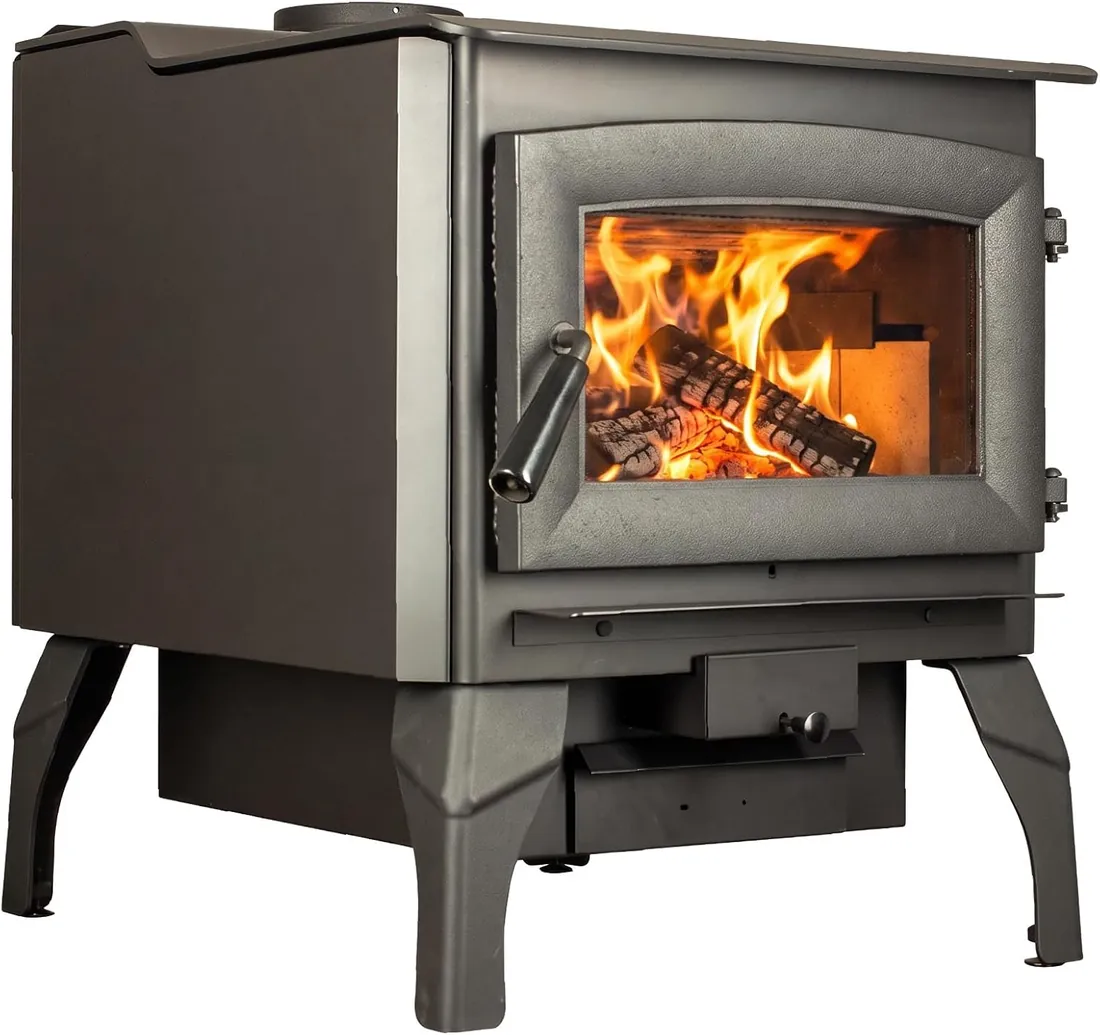
Ashley Hearth AW3200-P Wood Stove
3,200 sq ft · 152,000 BTU/h
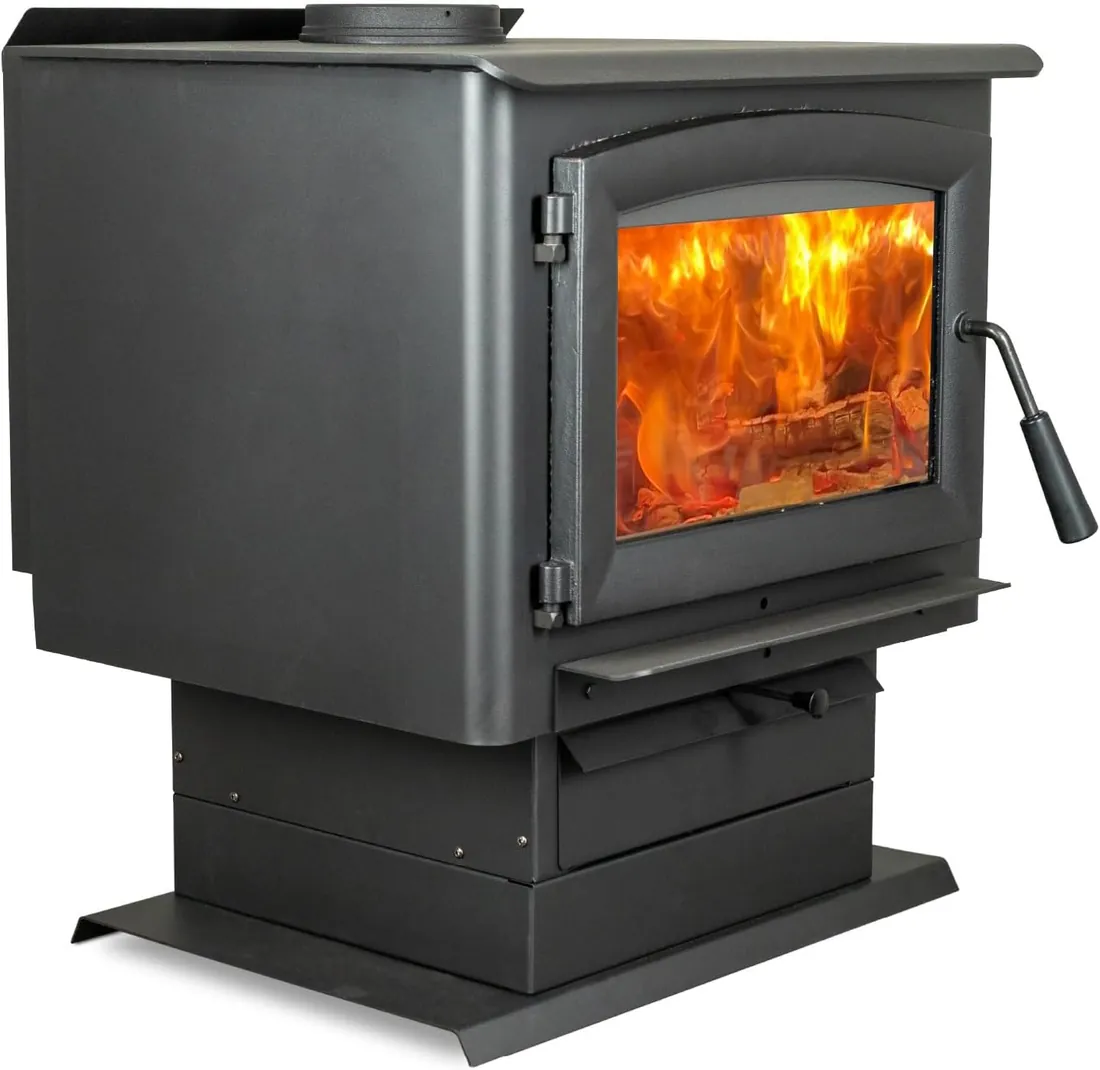
Ashley Hearth AW2520E-P 2,500 Sq Ft Wood Stove
2,500 sq ft · 112,800 BTU/h